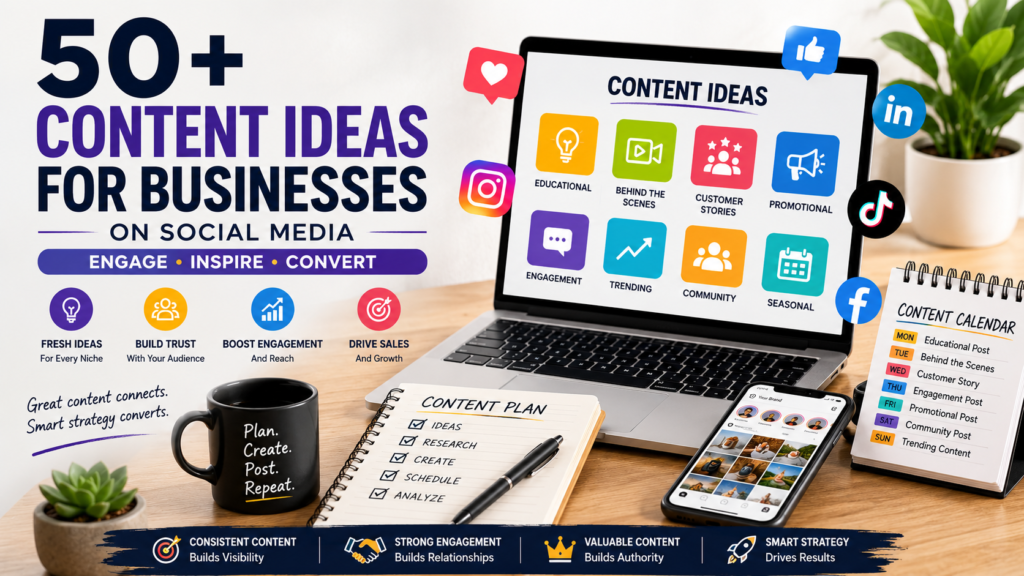
Content Ideas for Businesses on Social Media (50+ Ideas)
We have all been there. You open Instagram, LinkedIn, or Facebook, stare at the “Create a Post” window, and… nothing. The blinking cursor mocks you. You know you need to post to keep your audience engaged, but your mind is a total blank.
Running out of content ideas for businesses is one of the most common hurdles in digital marketing. Yet, maintaining a consistent presence is non-negotiable. Consistent posting trains the algorithms to favor your page, builds familiarity with your audience, and establishes your brand as an authority. When you stop posting, you effectively become invisible to your potential customers.
To break that creative block, you need a repeatable social media content strategy. Let’s dive into a massive library of 50+ proven social media content ideas that will keep your feeds active, engaging, and profitable.
What Makes Social Media Content Successful?
Before throwing spaghetti at the digital wall, it helps to know what sticks. The most successful business social media posts achieve a balance between three elements:
- Value: Does it teach, entertain, or solve a problem?
- Relatability: Does it sound like a human or a corporate robot?
- Actionability: Is it clear what the user should do next (like, comment, share, or buy)?
High social media engagement happens when your audience sees themselves in your content. Here are over 50 ideas categorized by purpose to help you fill your content calendar.
50+ Social Media Content Ideas for Businesses
1. Educational Content (Build Authority)
- 1. The “How-To” Guide: Break down a complex process into 3 simple steps. Example: A Delhi-based boutique hotel sharing “How to pack a suitcase to avoid wrinkles.”
- 2. Industry Myth-Busting: Call out a common misconception. Example: An SEO agency posting, “Why buying backlinks will ruin your website in 2026.”
- 3. Quick Tips & Hacks: Share a shortcut your audience can use today. Example: A SaaS startup sharing a keyboard shortcut that saves 10 minutes a day.
- 4. Definition of Terms: Explain industry jargon in plain language. Example: A financial advisor explaining what “dollar-cost averaging” means.
- 5. Infographics: Visualize data or a checklist. Example: A real estate agent sharing a chart of the home-buying timeline.
- 6. Book/Podcast Recommendations: Share resources that helped you grow. Example: A business coach sharing their top 3 leadership books.
- 7. Common Mistakes to Avoid: Warn your audience about pitfalls. Example: A fitness trainer posting “3 reasons your squat isn’t building muscle.”
- 8. Frequently Asked Questions (FAQ): Answer a question your sales team gets constantly. Example: A custom bakery answering, “How far in advance do I need to order a wedding cake?”
2. Behind-the-Scenes Content (Build Trust)
- 9. A Day in the Life: Show a hyper-lapse or vlog of your daily routine. Example: A cafe owner showing their 5:00 AM opening routine.
- 10. Meet the Team: Introduce an employee and share a fun fact about them. Example: “Meet Priya, our lead developer who runs marathons on weekends.”
- 11. Packaging Orders: Film a satisfying video of preparing a customer’s package. Example: An e-commerce jewelry brand wrapping a delicate necklace.
- 12. Workspace Tour: Show where the magic happens. Example: A remote graphic designer showing their minimalist desk setup.
- 13. Product Ideation: Share early sketches or brainstorming sessions for a new launch. Example: A clothing brand showing fabric swatches for next season.
- 14. Bloopers & Outtakes: Show that your team doesn’t take itself too seriously. Example: Blunders from a recent corporate photoshoot.
- 15. Company Milestone Celebrations: Celebrate your anniversary or your 1,000th customer. Example: A SaaS startup celebrating 5 years with a team cake-cutting video.
- 16. Tools of the Trade: Show the software or physical machinery you can’t live without. Example: A woodworker showcasing their favorite carving chisel.
3. Customer-Focused Content (Social Proof)
- 17. User-Generated Content (UGC): Repost a photo a customer took of your product. Example: A skincare brand sharing a customer’s shelfie.
- 18. Case Studies: Share a before-and-after transformation with hard metrics. Example: A digital marketing agency showing how they boosted a client’s ROI by 40%.
- 19. Screenshot Testimonials: Share a kind DM, text message, or Google review (with permission). Example: A local plumber sharing a text from a relieved homeowner.
- 20. Customer Spotlight: Interview a loyal customer about their journey. Example: A gym interviewing a member who just hit their personal best.
- 21. Overcoming Objections: Address a reason someone might hesitate to buy. Example: An eco-friendly brand explaining why their sustainable materials cost a bit more but last 5x longer.
- 22. Thank You Notes: A heartfelt post thanking your community for their ongoing support. Example: A ceramic artist thanking followers after a sold-out shop update.
- 23. Answering Customer Comments: Take a comment from a previous post and answer it via video. Example: A makeup brand demonstrating a specific application technique requested by a follower.
4. Promotional Content (Drive Sales)
- 24. Flash Sales: Announce a limited-time discount. Example: “20% off for the next 4 hours only!”
- 25. Product Demonstrations: Show your product in action, solving a real problem. Example: A kitchen gadget company showing how easily their chopper cuts onions without tears.
- 26. New Launch Teasers: Build hype with close-up shots and mystery countdowns. Example: A tech startup showing a silhouette of a new device.
- 27. Limited-Edition Drops: Highlight scarcity. Example: A luxury streetwear brand announcing only 100 jackets are available.
- 28. Client Transformations: Focus on the emotional shift after using your service. Example: A career coach showing a client moving from “burnt out” to “landing a dream executive role.”
- 29. Special Bundles: Group products together for a discounted price. Example: A coffee roaster offering a “Mug + Blend” holiday gift set.
- 30. Freebies & Lead Magnets: Promote a free guide or template in exchange for an email. Example: A financial planner offering a free budget spreadsheet link in bio.
- 31. Hard Pitch: Directly state what you sell, who it’s for, and how to buy it. Example: A copywriter opening spots for their quarterly retainer services.
5. Engagement Posts (Boost Algorithm Reach)
- 32. “This or That” Polls: Ask your audience to choose between two options. Example: An interior designer asking, “Minimalist Modern or Cozy Rustic?”
- 33. Fill-in-the-Blank: Keep it simple and easy to answer. Example: “The first thing I do when I wake up is _________.”
- 34. Ask Me Anything (AMA): Host a live stream or use the Instagram Stories Q&A sticker. Example: A startup founder taking questions about fundraising.
- 35. Caption This: Post a funny or unusual picture and ask followers to write the caption. Example: A pet shop posting a photo of a cat staring intently at a toy.
- 36. Tag a Friend: Encourage shares. Example: “Tag a friend who desperately needs a coffee break today.”
- 37. Giveaways: Partner with a complementary business for a prize bundle. Example: A local spa and a local florist teaming up for a Mother’s Day giveaway.
- 38. Pop Quiz: Test your audience’s knowledge about your niche. Example: A wine merchant asking, “Which region does Champagne legally have to come from?”
6. Community-Building Content (Foster Loyalty)
- 39. Share Your Core Values: Talk about what your company stands for beyond making money. Example: A sustainable shoe brand discussing their fair-wage factory partnerships.
- 40. Support a Local Cause: Highlight a charity or initiative you back. Example: A restaurant donating a percentage of weekend sales to a local food bank.
- 41. Relatable Memes: Use industry-specific humor to say, “We get it.” Example: An accounting firm posting a meme about the chaos of tax season.
- 42. Throwback Thursday (#TBT): Show where the business started versus where it is now. Example: A bakery showing their first home-kitchen oven next to their commercial kitchen.
- 43. Lessons Learned: Share a business failure and the lesson it taught you. Example: A software founder detailing a major launch bug and how they fixed it.
- 44. Inspirational Quotes: Share a quote that genuinely aligns with your brand ethos. Example: A fitness studio sharing a motivational quote about consistency over perfection.
- 45. Spotlight Other Businesses: Support your local business ecosystem. Example: A digital agency recommending their favorite local coffee shop for client meetings.
7. Trending & Seasonal Content (Stay Relevant)
- 46. Holiday Greetings: Tailor major holidays to your brand voice. Example: A candle company wishing followers a bright and cozy Diwali or Christmas.
- 47. Trending Audio Challenges: Use a popular track on Reels or TikTok adapted to your niche. Example: A real estate team using a trending comedic audio to show a house tour.
- 48. Seasonal Product Care: Teach customers how to maintain items based on the weather. Example: A leather goods brand sharing how to protect boots from monsoon rains or winter snow.
- 49. End-of-Year Wrap-Ups: Share Spotify-wrapped style stats about your business year. Example: “Together, we shipped 15,000 packages to 42 countries this year!”
- 50. Reaction to Industry News: Give your professional take on a breaking update. Example: A marketing consultant discussing a major new algorithm change.
- 51. Shopping Events Countdown: Build urgency for Black Friday, Cyber Monday, or festive sales. Example: “3 days left until our biggest sale of the year drops.”
Master List Summary
Category | Best For | Top Example Idea |
Educational | Authority & Trust | Step-by-step “How-To” guides |
Behind-the-Scenes | Humanizing the Brand | “Day in the Life” vlogs and team intros |
Customer-Focused | Social Proof & Conversion | Screenshot testimonials and UGC |
Promotional | Direct Revenue & Sales | Product demos and limited flash sales |
Engagement | Algorithmic Reach | “This or That” polls and AMA sessions |
Community-Building | Loyalty & Retention | Industry humor/memes and brand values |
Trending/Seasonal | Relevance & Virality | Trending audio clips and holiday campaigns |
How to Create a Month of Social Media Content in One Day
The biggest mistake business owners make is trying to create content daily. It leads to burnout and half-baked posts. Instead, adopt a batching system to build your content calendar ideas efficiently.
- Define Your Content Pillars: Pick 3 to 4 core themes from the list above (e.g., Educational, Behind-the-Scenes, Promotional).
- Map Out a Simple Grid: Decide on a realistic posting cadence—say, three times a week (Monday, Wednesday, Friday). Over a four-week month, you only need 12 posts.
- Write the Captions First: Set a timer for two hours. Sit down with a hot drink and write all 12 captions in one sitting. Don’t worry about graphics or videos yet; get the words right.
- Batch Your Visuals: Spend the afternoon filming your short-form videos or designing templates on Canva. Because you already know what the captions say, you know exactly what visuals you need to match them.
- Schedule and Forget: Use scheduling tools like Meta Business Suite, Buffer, or Hootsuite to queue up your entire month. Now you can focus entirely on running your business while your social media works in the background.
Common Social Media Content Mistakes Businesses Make
Even with great social media marketing ideas, execution matters. Avoid these classic pitfalls:
- Treating Social Media Like a Digital Billboard: If every single post says “Buy from me,” people will unfollow you. Aim for the 80/20 rule: 80% value, education, and entertainment; 20% direct promotion.
- Ignoring the Comments Section: Social media is a two-way street. If someone takes the time to comment on your post, reply to them. The algorithm rewards active engagement, and real conversations build relationships that lead to sales.
- Chasing Vanity Metrics Over Conversions: A funny video that gets 100,000 views but attracts zero target buyers is less valuable than a targeted post that gets 500 views but generates 5 high-quality leads. Focus on metrics that impact your bottom line.
- Giving Up Too Soon: Building an organic audience takes time. Consistency over six months will outperform a massive blast of content followed by three weeks of silence every single time.
Frequently Asked Questions
What should businesses post on social media?
Businesses should post a healthy mix of educational content that establishes authority, behind-the-scenes content that builds human trust, and promotional content that clearly explains how to buy their products or services.
How often should businesses post?
Quality and consistency matter far more than sheer volume. For most social media marketing for small businesses, posting 3 to 4 times a week consistently is much better than posting twice a day for a week and then disappearing for a month.
What content gets the most engagement?
Content that triggers an emotional reaction—like humor, inspiration, or relatable frustration—historically drives the highest social media engagement. Interactive elements like polls, quizzes, and direct questions also encourage users to pause and participate.
How do businesses avoid running out of ideas?
Keep a running “Idea Bank” on your phone or project management tool. Every time a customer asks a question, a team member tells a funny story, or you solve a unique problem, write it down immediately. You’ll never have to stare at a blank screen again.
The perfect social media strategy doesn’t exist, but an active one does. Don’t let the pressure to be perfect paralyze your marketing efforts.
Pick just three ideas from the list above right now. Write down a quick caption for each, snap a photo or record a quick video on your phone, and schedule them for the upcoming week. The momentum you build today is exactly what will scale your brand tomorrow.