
Difference Between Organic and Paid Social Media Marketing
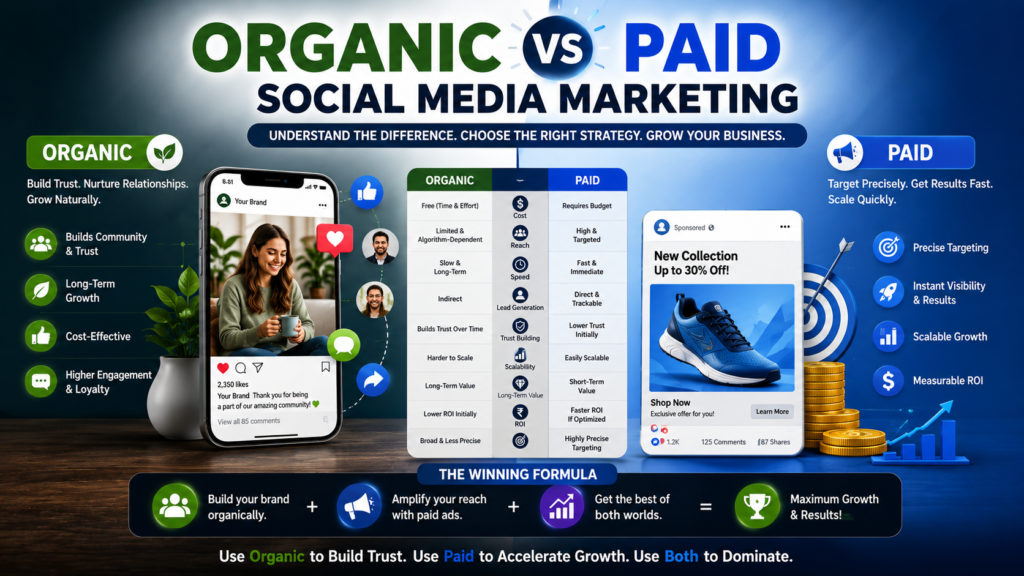
Difference Between Organic and Paid Social Media Marketing “Should I focus on building our organic social media, or should I just invest in paid ads?” If you are a business owner or marketing manager, you have likely asked yourself this exact question. It is one of the most common dilemmas in digital marketing. On one hand, you see brands going viral with creative videos without spending a dime on ad placements. On the other hand, you hear about e-commerce stores scaling from zero to millions by dialing in their paid advertising framework. When you are managing a growing business, time and budget are your most finite resources. Misallocating either hurts your bottom line. The truth is, choosing between organic and paid social media marketing is not an either/or proposition. Both serve entirely different functions in your growth funnel. Understanding how they operate individually—and how they amplify each other when combined—is the key to building a sustainable social media marketing strategy. Let’s break down how both channels function, map out their core differences, and look at how real-world businesses leverage them for maximum revenue growth. What Is Organic Social Media Marketing? Organic social media marketing refers to any free content you share on social media platforms without paying for distribution. This includes your daily posts, images, long-form articles, stories, reels, and direct interactions with your audience in the comments section. How It Works When you post organically, the platform’s algorithm determines who sees your content based on relevance, engagement signals (likes, shares, comments), and user behavior. Your primary audience consists of your existing followers, plus a small percentage of non-followers if your content receives high engagement or hits trending audio and hashtags. Real-World Business Examples The Local D2C Brand: A sustainable clothing brand in Mumbai posts behind-the-scenes Instagram Reels showing how their artisans dye fabrics. Viewers connect with the craftsmanship, leave comments, and share the video with friends. The B2B Consultant: A SaaS marketing consultant based in New York posts a detailed case study on LinkedIn explaining how they lowered churn by 15%. Other tech founders read it, bookmark it, and view the consultant as an industry authority. Benefits Zero Direct Ad Cost: Publishing content costs nothing but your time and creative effort. Builds Deep Authenticity: It gives your brand a human voice, allowing you to nurture relationships and build long-term customer trust. Acts as a Digital Storefront: When potential customers search for your business, your organic profiles show them that your company is active, legitimate, and responsive. Limitations Declining Organic Reach: Algorithmic shifts have systematically lowered organic reach across platforms like Facebook and Instagram. You can no longer rely on organic posts to reach 100% of your own followers, let alone new audiences. Slow Pipeline Velocity: Building a highly engaged organic community takes months, sometimes years, of consistent posting. What Is Paid Social Media Marketing? Paid social media marketing involves paying a platform to display your content to specific target audiences who do not necessarily follow your brand. This encompasses sponsored posts, video ads, lead-generation forms, and carousel ads managed through tools like Meta Ads Manager, LinkedIn Campaign Manager, or TikTok Ads. How It Works You set a budget, choose a specific business objective (such as website traffic, lead generation, or conversions), and define your target audience using demographics, interests, behaviors, or custom data. The platform then distributes your ads into users’ feeds, labeling them as “Sponsored.” Real-World Business Examples The E-commerce Store: An international footwear brand launches a Meta catalog ad targeting users who visited their website but left without buying. The ad displays the exact shoes the user viewed, offering a 10% discount to close the sale. The Local Service Business: A dental clinic in Delhi runs hyper-local Facebook ads targeted within a 5-kilometer radius of their office, offering a complimentary teeth-cleaning consultation to generate direct phone inquiries. Benefits Instant Visibility: Your message bypasses the organic algorithm and appears directly in front of prospects the moment your campaign goes live. Precision Targeting: You can target prospects based on exact variables—such as job titles, specific purchasing habits, geographic location, or lookalike audiences modeled after your best customers. Predictable Scalability: If you spend $100 and generate $300 in revenue, you can systematically increase your ad budget to scale your sales volume. Limitations Requires Consistent Capital: The moment you pause your ad spend, your traffic, lead flow, and sales from that channel drop to zero. Ad Fatigue and Costs: Ad costs fluctuate based on competition, auction dynamics, and season. Additionally, if you don’t refresh your creative assets regularly, audiences tune out your ads. Organic vs Paid Social Media Marketing: Key Differences To help you visualize how these strategies contrast, here is a breakdown across core business factors: Factor Organic Social Media Paid Social Media Direct Cost Free to publish (only costs time/production). Requires ongoing media spend. Reach Limited to followers and a small algorithmic sliver. Guaranteed placement to targeted non-followers. Speed Slow, iterative, long-term build. Immediate traffic and visibility. Lead Generation Indirect; relies on profile links and bio calls-to-action. Direct; uses native forms and landing page clicks. Trust Building High; community perceives it as authentic value. Moderate; users know they are being sold to. Scalability Hard to scale predictably; tied to algorithm volatility. Highly scalable by increasing ad budget. Audience Targeting Broad; determined by platform algorithms. Granular; based on custom data and demographics. Primary ROI Metric Engagement rate, community sentiment, retention. Cost Per Lead (CPL), Customer Acquisition Cost (CAC), ROAS. Pros and Cons Matrix Organic Social Media Marketing Advantages: Establishes a permanent digital asset; drives compound interest over time; lowers overall customer acquisition costs over the long run. Disadvantages: Subject to sudden algorithm updates; demands high creative output; impossible to predict short-term revenue outcomes. Best Use Cases: Brand storytelling, customer support, community engagement, educating your market, and retaining existing clients. Paid Social Media Marketing Advantages: Guaranteed visibility; perfect for time-sensitive promotions; clean attribution tracking back to specific creative variants. Disadvantages: Requires technical media-buying expertise; high upfront financial risk if campaigns